
Patellar Tendinopathy Treatment Sydney | Shockwave for Jumper's Knee
Jumper's knee — chronic anterior knee pain at the patellar tendon that limits jumping, running, and sport. Shockwave combined with a loading program is a well-supported treatment for persistent presentations.
Book a Free Call Book an Appointment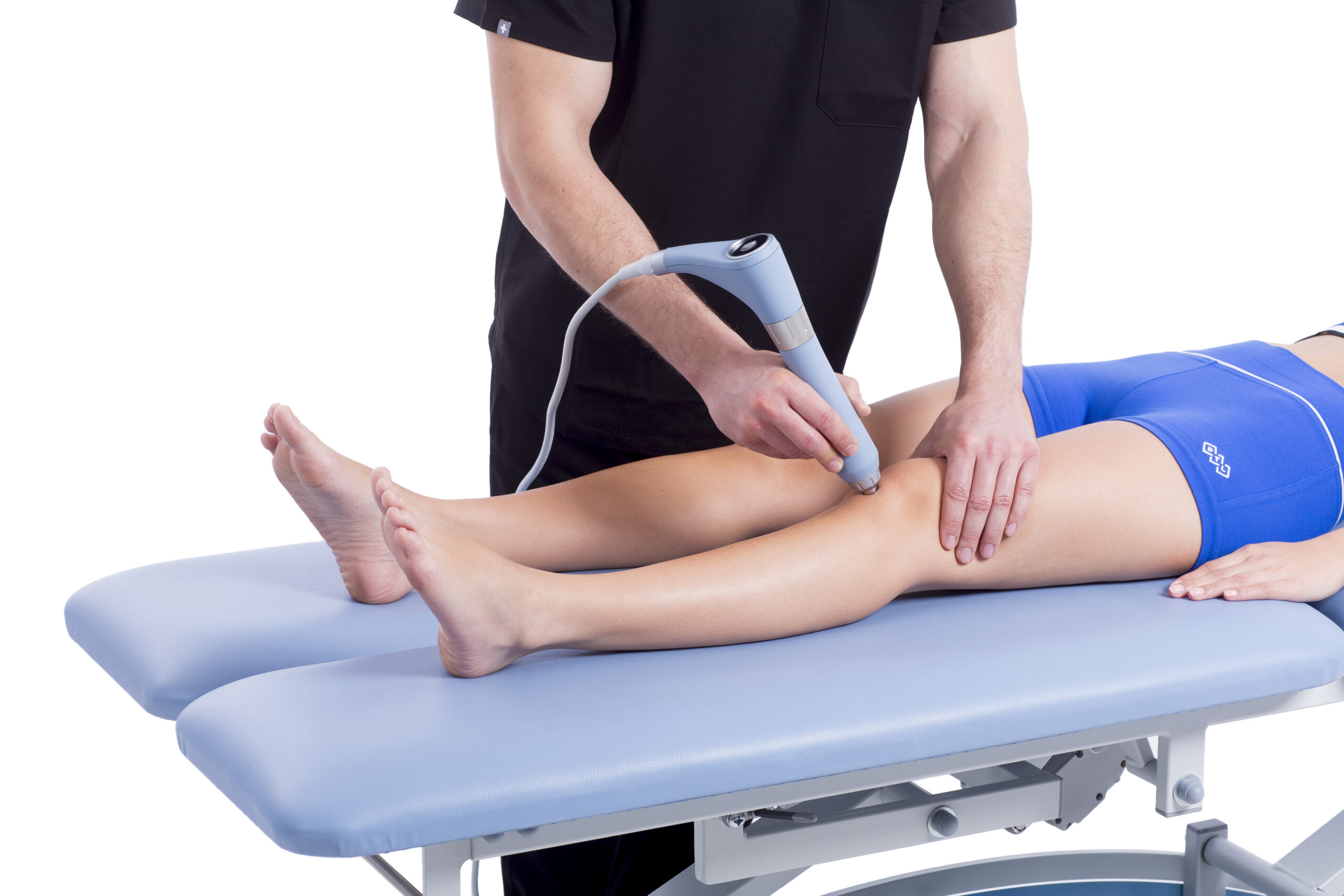
What is Patellar Tendinopathy?
The patellar tendon connects the kneecap (patella) to the shin bone (tibia) and plays a critical role in transmitting the force generated by the quadriceps during jumping, running, and changes of direction. It is one of the highest-load tendons in the body during explosive athletic activity.
Patellar tendinopathy — commonly called jumper's knee — refers to degeneration of the patellar tendon, typically at its attachment on the inferior pole of the patella. Like other tendinopathies, the chronic form is not primarily inflammatory; the tendon undergoes structural disorganisation and collagen disruption, which is why rest alone often fails to resolve it.
It is particularly common in jumping and court sports — basketball, volleyball, AFL, netball — but is also seen in runners and gym-goers who perform high volumes of lower limb loading without adequate recovery.
Common Symptoms
Patellar tendinopathy has a recognisable pattern. If these sound familiar, shockwave may be worth discussing.
Why Shockwave for Patellar Tendinopathy?
Shockwave is a well-supported treatment for chronic patellar tendinopathy — particularly in athletes who have failed to respond to loading programs alone.
How We Treat Patellar Tendinopathy
Patellar tendinopathy requires a structured, progressive approach. Shockwave is one component — the loading program is equally important.
Assessment & Diagnosis
We confirm the diagnosis clinically, assess the severity using validated outcome measures, and evaluate contributing factors — quadriceps strength and flexibility, hip strength, training load patterns, and sport demands. We also screen for other causes of anterior knee pain that may present similarly.
Shockwave Treatment
Using the BTL-6000 SWT, we apply targeted shockwaves to the patellar tendon — focusing on the inferior pole attachment and any areas of tendon thickening identified on assessment. A typical course involves 3–6 sessions spaced one week apart.
Isometric Loading for Pain Management
In the early phase, isometric quadriceps exercises — sustained contractions held for 30–45 seconds — are used to reduce tendon pain rapidly. These can be performed even during the sporting season and are a useful tool for managing symptoms before and after training.
Heavy Slow Resistance Loading
Progressive leg press and single-leg squat exercises performed with a slow, controlled tempo and increasing load. This is the core of the rehabilitation program and drives the tendon remodelling that shockwave initiates. Load is progressed based on symptom response.
Return to Sport
A structured return to jumping, sprinting, and sport-specific training based on strength benchmarks and symptom monitoring. We use objective measures — not just pain — to guide return-to-sport decisions and reduce the risk of recurrence.
Shockwave + Loading = Best Outcomes
The evidence for patellar tendinopathy consistently shows that exercise — specifically progressive tendon loading — is the most important driver of long-term recovery. Shockwave enhances and accelerates this process.
Sustained isometric quadriceps contractions (e.g. wall sit, leg press hold) that rapidly reduce tendon pain and can be used as a pre-activity pain management tool. Particularly useful for athletes who need to continue competing during treatment.
Progressive leg press and single-leg squat variations performed with a slow tempo (3 seconds down, 3 seconds up) and increasing load. This drives collagen synthesis and structural remodelling of the patellar tendon over 6–12 weeks.
Progressive plyometric loading — drop squats, hurdle hops, sport-specific jump training — that prepares the tendon for the elastic demands of competition. Progressed based on strength benchmarks and symptom monitoring.
Key Studies & Evidence
Peer-reviewed publications supporting shockwave therapy for patellar tendinopathy.
A systematic review and meta-analysis examining the effectiveness of shockwave therapy across three major tendinopathies including patellar tendinopathy. Found clinically meaningful improvements in pain and function.
View on PubMed →A narrative review examining the evidence for combining shockwave with exercise programs for tendinopathy — the clinical rationale for our combined approach at SportsFit.
View on PMC →These references are provided for informational purposes. Individual responses to treatment vary. This information does not constitute medical advice.
FAQ — Patellar Tendinopathy & Shockwave
In many cases, yes — particularly during the competitive season. We use a symptom-monitoring approach to guide training and competition loads during treatment. We'll advise on what to modify in the 24–48 hours after each shockwave session, but the goal is to keep you competing where possible.
This is one of the most common presentations we see. Patellar tendinopathy often doesn't resolve with rest alone — the tendon needs a progressive loading stimulus to remodel and build capacity. Rest reduces pain temporarily, but when load returns, symptoms come back. A structured loading program combined with shockwave addresses the underlying tissue problem.
A typical course involves 3–6 shockwave sessions spaced one week apart, running alongside a progressive loading program. Response varies depending on symptom duration, severity, and how consistently the exercise program is followed. We'll give you a realistic picture at your first appointment.
No referral needed. Book a free call or an initial appointment directly online.
Not Sure If Shockwave Is Right for Your Knee?
Book a free call with one of our physios. We'll ask about your symptoms and give you an honest answer — no obligation to proceed.
Book a Free CallAlready decided? Book an appointment directly →
No referral needed · Five Dock, Inner West Sydney · Health fund rebates available