
Proximal Hamstring Tendinopathy Treatment Sydney
Deep buttock and sit-bone pain that worsens with sitting, running uphill, and speed work. One of the most stubborn tendinopathies to treat — and one where shockwave combined with progressive loading offers a meaningful pathway forward.
Book a Free Call Book an Appointment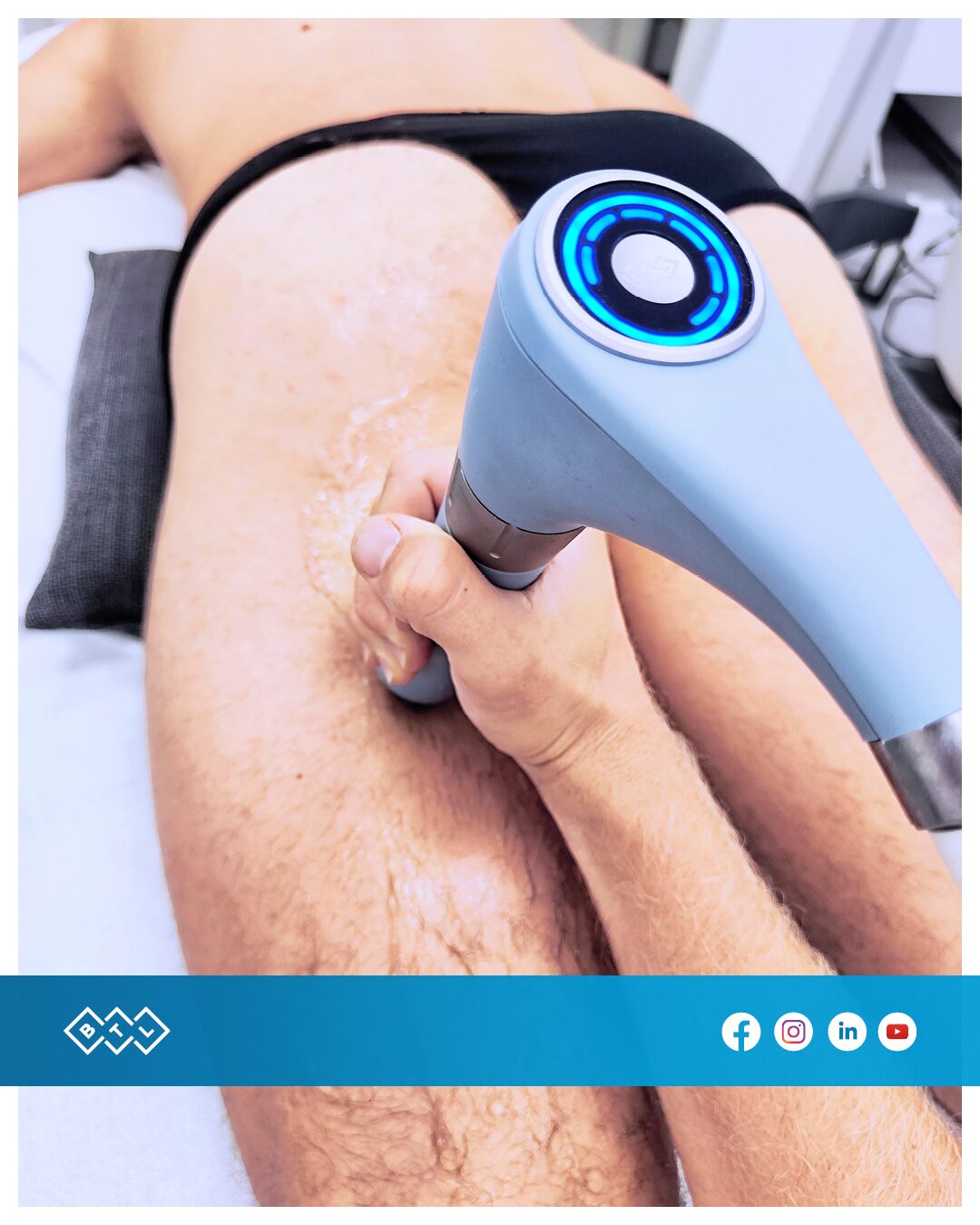
What is Proximal Hamstring Tendinopathy?
The proximal hamstring tendon attaches the three hamstring muscles — biceps femoris, semimembranosus, and semitendinosus — to the ischial tuberosity, the bony prominence you sit on (commonly called the sit bone). This tendon is subjected to significant compressive and tensile forces during running, particularly at high speeds and on hills.
Proximal hamstring tendinopathy refers to degeneration of this tendon at or near its attachment to the ischial tuberosity. It produces deep, aching buttock pain that is notoriously difficult to treat — and is frequently misdiagnosed as gluteal muscle pain, sciatica, or referred pain from the lumbar spine.
It is particularly common in distance runners and masters athletes, and is one of the most challenging tendinopathies encountered clinically due to the difficulty of adequately offloading the tendon while maintaining training, and the compressive loads that sitting imposes on the attachment site.
Common Symptoms
Proximal hamstring tendinopathy has a distinctive symptom pattern — though it is frequently confused with other conditions. If these sound familiar, an assessment is worthwhile.
Important: Proximal hamstring tendinopathy is frequently misdiagnosed. Pain in this region can also arise from the sciatic nerve, lumbar spine, sacroiliac joint, or hip. An accurate diagnosis is essential before commencing treatment — which is why assessment comes first.
Why Shockwave for Proximal Hamstring Tendinopathy?
Proximal hamstring tendinopathy is one of the most difficult tendinopathies to manage conservatively. Shockwave, combined with a carefully structured loading program, offers a meaningful treatment pathway for chronic presentations.
How We Treat Proximal Hamstring Tendinopathy
This is one of the conditions where getting the details right matters most. A generic hamstring program will make it worse. Here's how we approach it.
Differential Diagnosis & Assessment
We rule out other causes of deep buttock pain — sciatic nerve irritation, piriformis syndrome, sacroiliac joint dysfunction, and lumbar referred pain — before confirming the diagnosis of proximal hamstring tendinopathy. This step is critical and is where many patients have been mismanaged previously. We assess hip strength, hamstring load tolerance, and sitting posture as part of the evaluation.
Shockwave Treatment
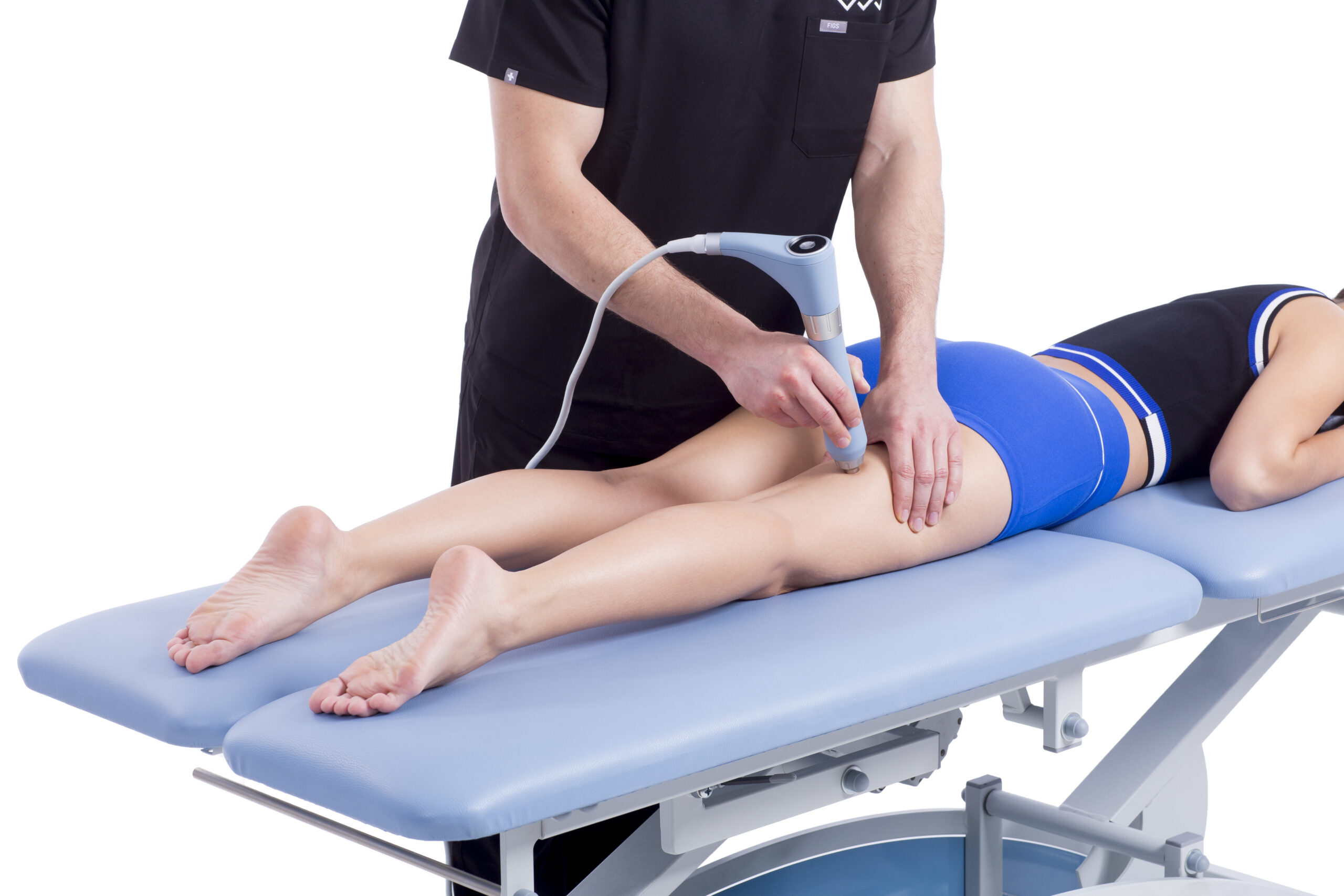
Using the BTL-6000 SWT, we apply shockwaves directly to the proximal hamstring tendon attachment at the ischial tuberosity. The depth and pressure output of the BTL-6000 is particularly important for this condition given how deep the tissue sits. A typical course involves 3–6 sessions spaced one week apart.
Compression-Modified Loading Program
The loading program for proximal hamstring tendinopathy is specifically designed to minimise compressive load at the tendon attachment during the early phases. This means we avoid exercises that place the hamstring in a stretched position under load — such as Romanian deadlifts and stiff-leg exercises at full hip flexion — until the tendon has sufficient capacity to tolerate them. We start with neutral-hip isometric hamstring exercises and progress systematically.
Running Load Management
For runners, we provide specific guidance on training modification — reducing hills, pace, and total volume in the early phase while maintaining some running where possible. We use symptom monitoring to guide load progression and structure the return to full training as the tendon responds to treatment.
Sitting & Daily Load Management
We advise on sitting posture and duration management — including the use of a rolled towel or cushion under the thigh rather than the sit bone to reduce compressive load during prolonged sitting. These practical modifications are often overlooked but are clinically important during the treatment period.
Why the Exercise Details Matter
Proximal hamstring tendinopathy is uniquely sensitive to compressive load. Getting the exercise prescription wrong — particularly in the early phases — reliably makes it worse. This is why a generic program isn't appropriate.
Isometric hamstring contractions performed with the hip in a neutral position — avoiding deep flexion. Exercises such as supine bridge holds and prone hip extension reduces compressive tendon load while providing the stimulus for initial tissue adaptation.
Progressive hamstring curls, hip thrusts, and single-leg bridge variations that load the tendon through increasing range as tolerance improves. Load and hip flexion angle are progressed systematically based on symptom response — not according to a fixed timeline.
Structured reintroduction of higher-intensity running — progressively adding hills, tempo work, and speed sessions. This phase is guided by strength benchmarks and symptom monitoring, with a focus on preventing the load spikes that typically trigger recurrence.
The most common mistake: Stretching the hamstring. Aggressive hamstring stretching — which increases compressive load at the ischial tuberosity — consistently aggravates proximal hamstring tendinopathy. If you've been advised to stretch it out, this is likely making your symptoms worse. We'll explain why and replace stretching with a loading approach that actually addresses the problem.
Key Studies & Evidence
Peer-reviewed publications relevant to shockwave therapy and proximal hamstring tendinopathy management.
A comprehensive update on shockwave therapy covering biological mechanisms and clinical evidence across musculoskeletal tendinopathies. Published in EFORT Open Reviews.
View on PubMed →A narrative review examining the rationale and evidence for combining shockwave with progressive loading programs for tendinopathy management — directly relevant to our combined treatment approach.
View on PMC →These references are provided for informational purposes. Individual responses to treatment vary. This information does not constitute medical advice.
FAQ — Proximal Hamstring Tendinopathy & Shockwave
Possibly. Deep buttock pain is commonly attributed to sciatica, but proximal hamstring tendinopathy produces a very similar symptom picture and is frequently misdiagnosed. Key differentiators include pain that is worsened by sitting, running hills and speed work, and is reproduced by palpation directly on the sit bone — rather than pain that radiates down the full length of the leg with a neurological character. A proper clinical assessment is the only way to distinguish between them reliably.
This is very common with proximal hamstring tendinopathy. Stretching the hamstring increases compressive load at the ischial tuberosity — which is exactly the load that aggravates this condition. Hamstring stretching is contraindicated in the early management of proximal hamstring tendinopathy. The tendon needs progressive loading through an appropriate range, not stretching.
In most cases, some running can be maintained — with load modification. Flat, easy running is generally better tolerated than hills and speed work. We'll give you specific guidance on what to reduce and how to structure training during the treatment period, using symptom monitoring as your guide.
It is one of the slower tendinopathies to respond to treatment — often taking 3–6 months for meaningful improvement in chronic presentations. Shockwave can accelerate the process, but the loading program needs to be followed consistently and patiently. We'll give you a realistic timeline at your initial assessment based on your specific presentation.
No referral needed. Book a free call or an initial appointment directly online.
Not Sure If Shockwave Is Right for Your Buttock Pain?
Book a free call with one of our physios. We'll ask about your symptoms, help clarify the diagnosis, and give you an honest answer about the best path forward.
Book a Free CallAlready decided? Book an appointment directly →
No referral needed · Five Dock, Inner West Sydney · Health fund rebates available